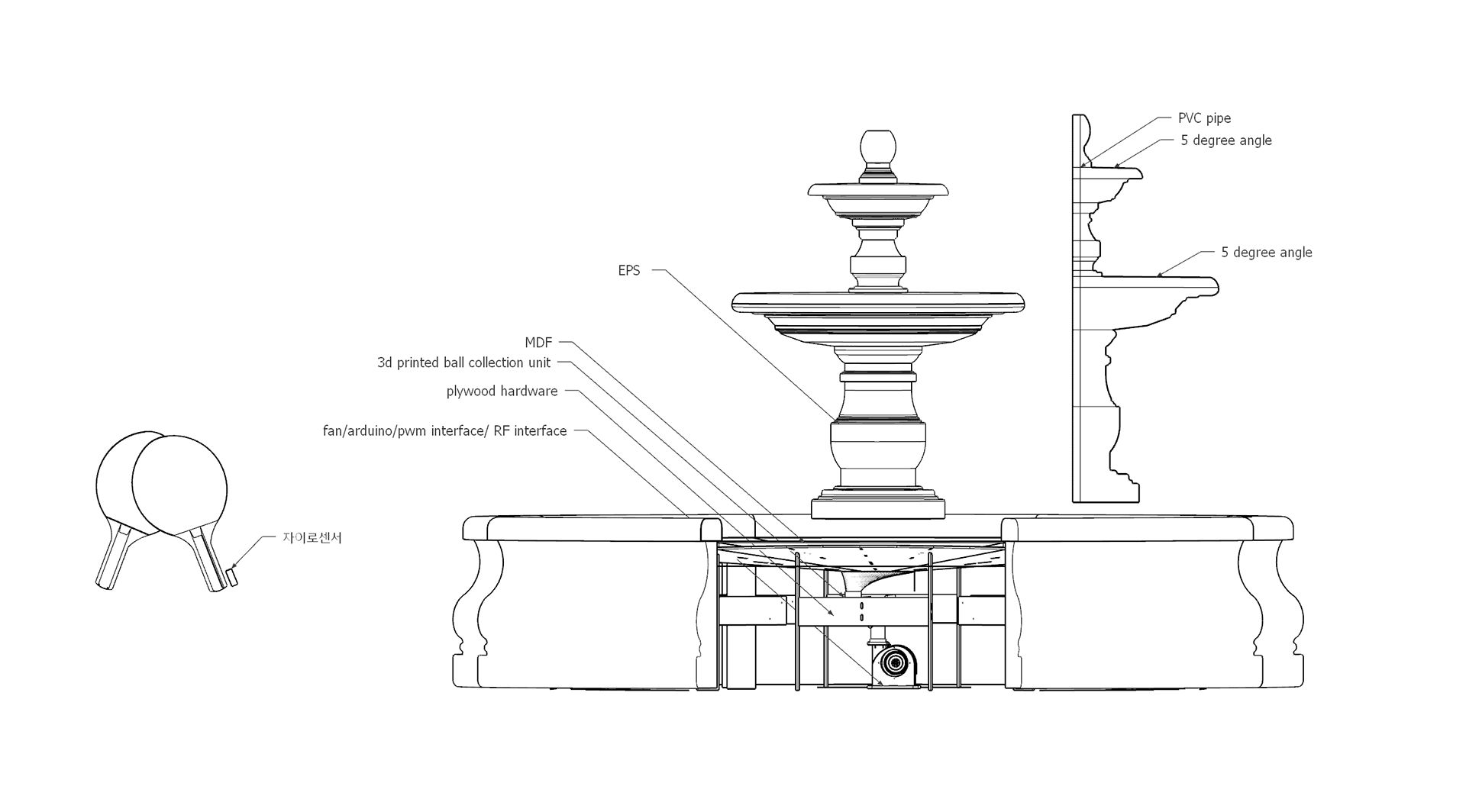
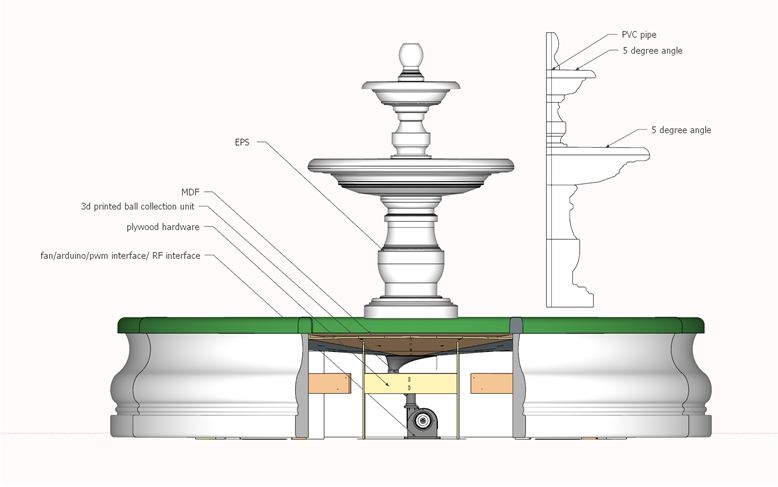
BLDC motor, PWM controlled fan, Arduino, gyro sensor, ping pong ball, silicone, plywood, EPS top paint, PLA, RF communication module, lithium-ion rechargeable battery, PVC, power bank, 260x360x360cm.
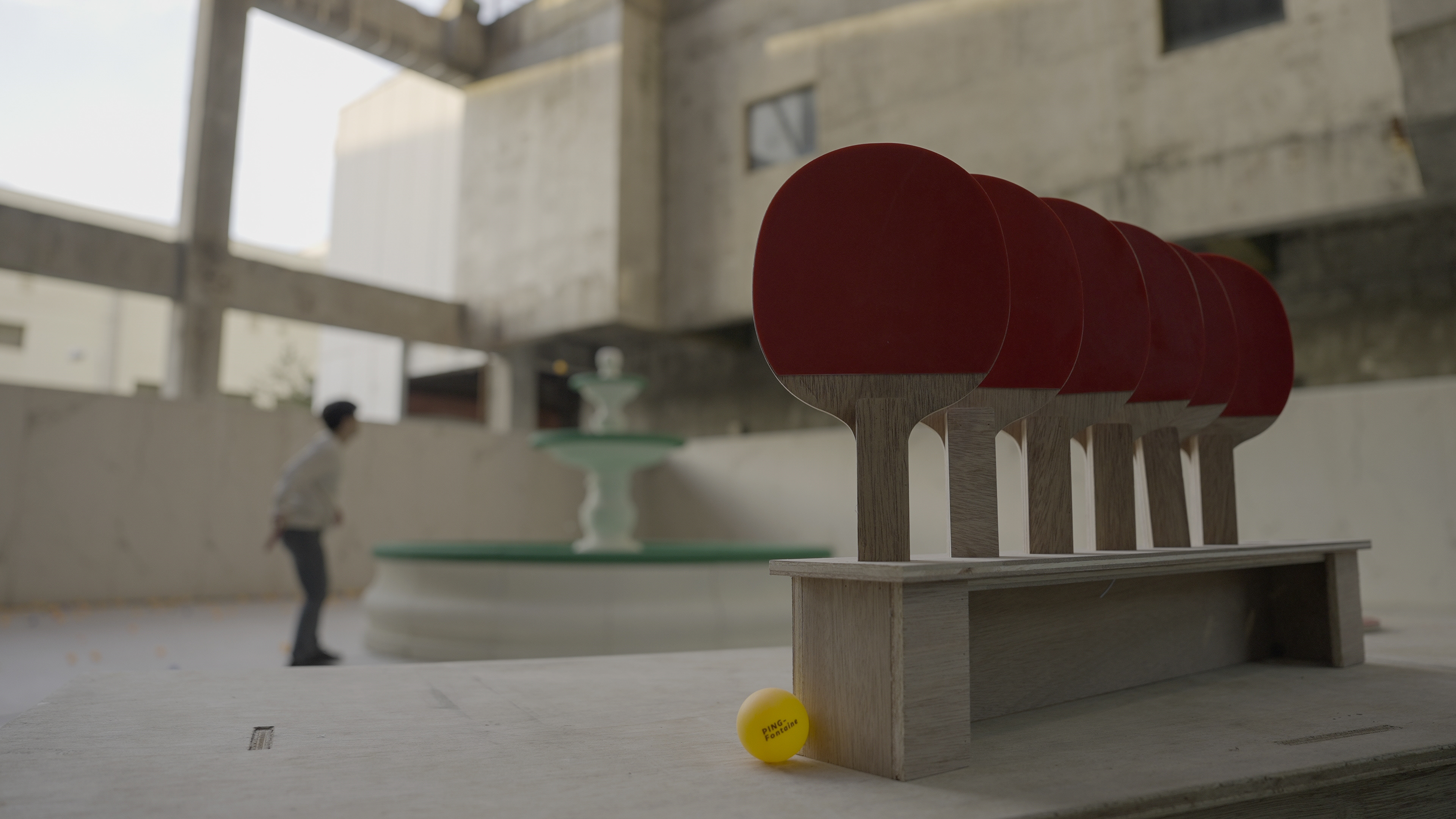
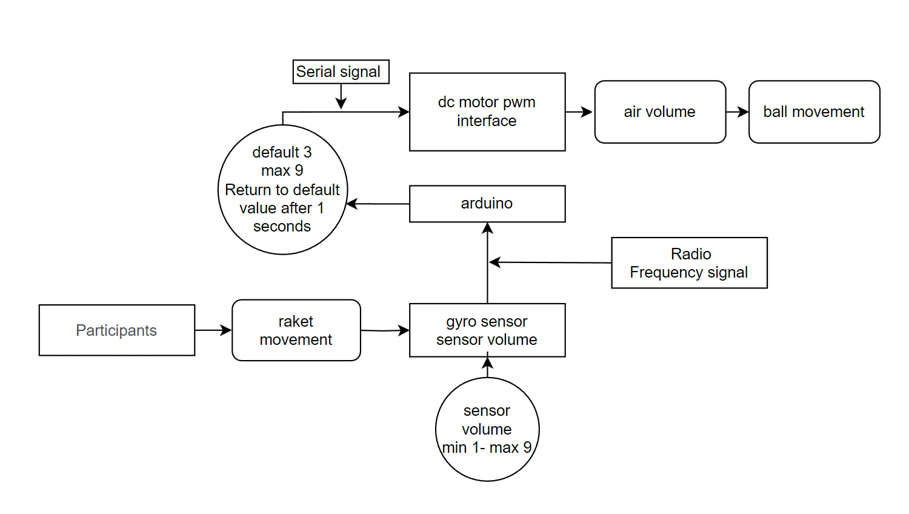
PINGFONTAINE은 관객의 개입이 시스템을 갱신하는 변수로 작동하는 순환 구조다. 관객이 쥔 탁구채의 자이로 센서(입력)와 PWM 제어 팬(출력)은 끊임없이 상호 보정하며 공기의 압력과 리듬을 만들어낸다.
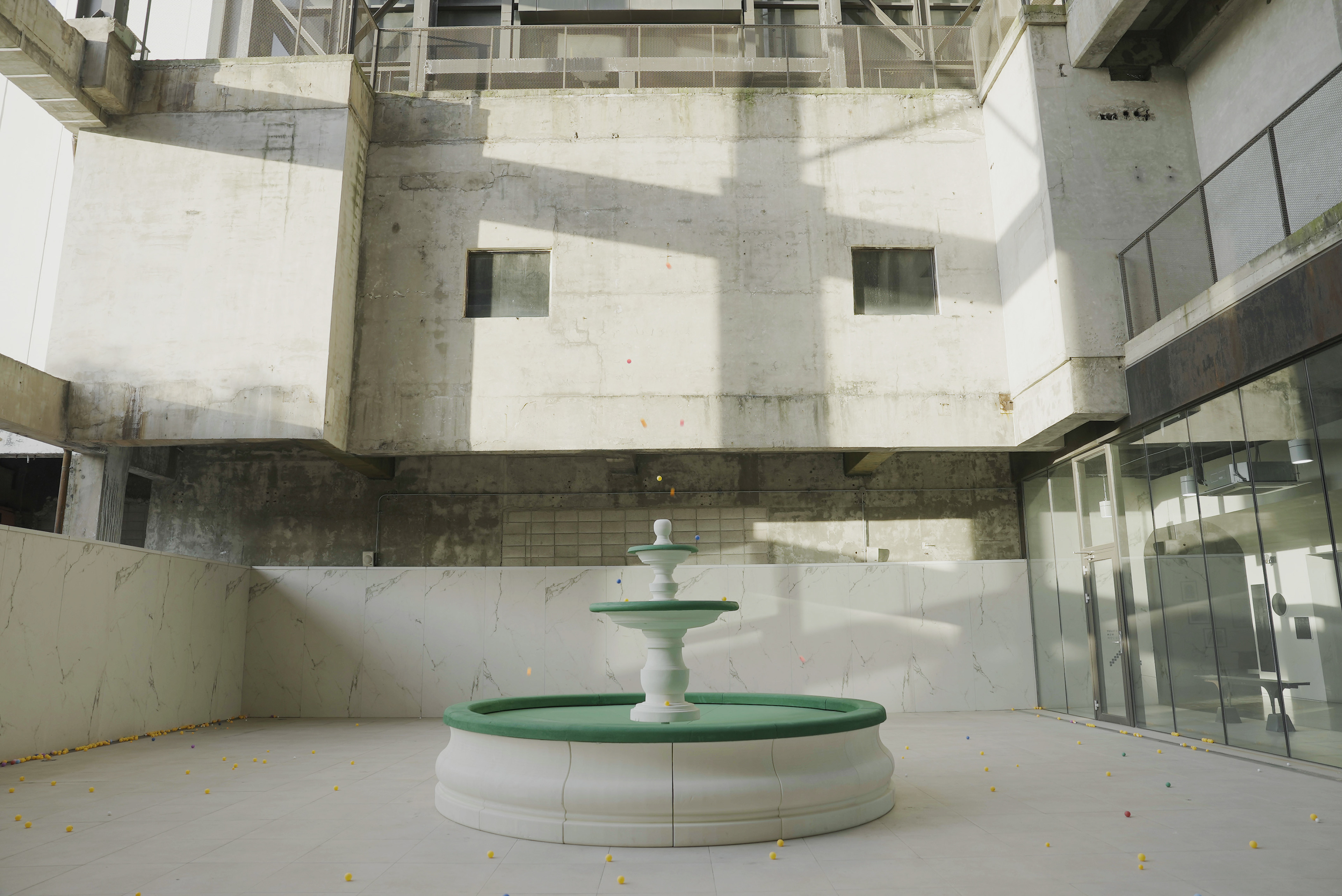
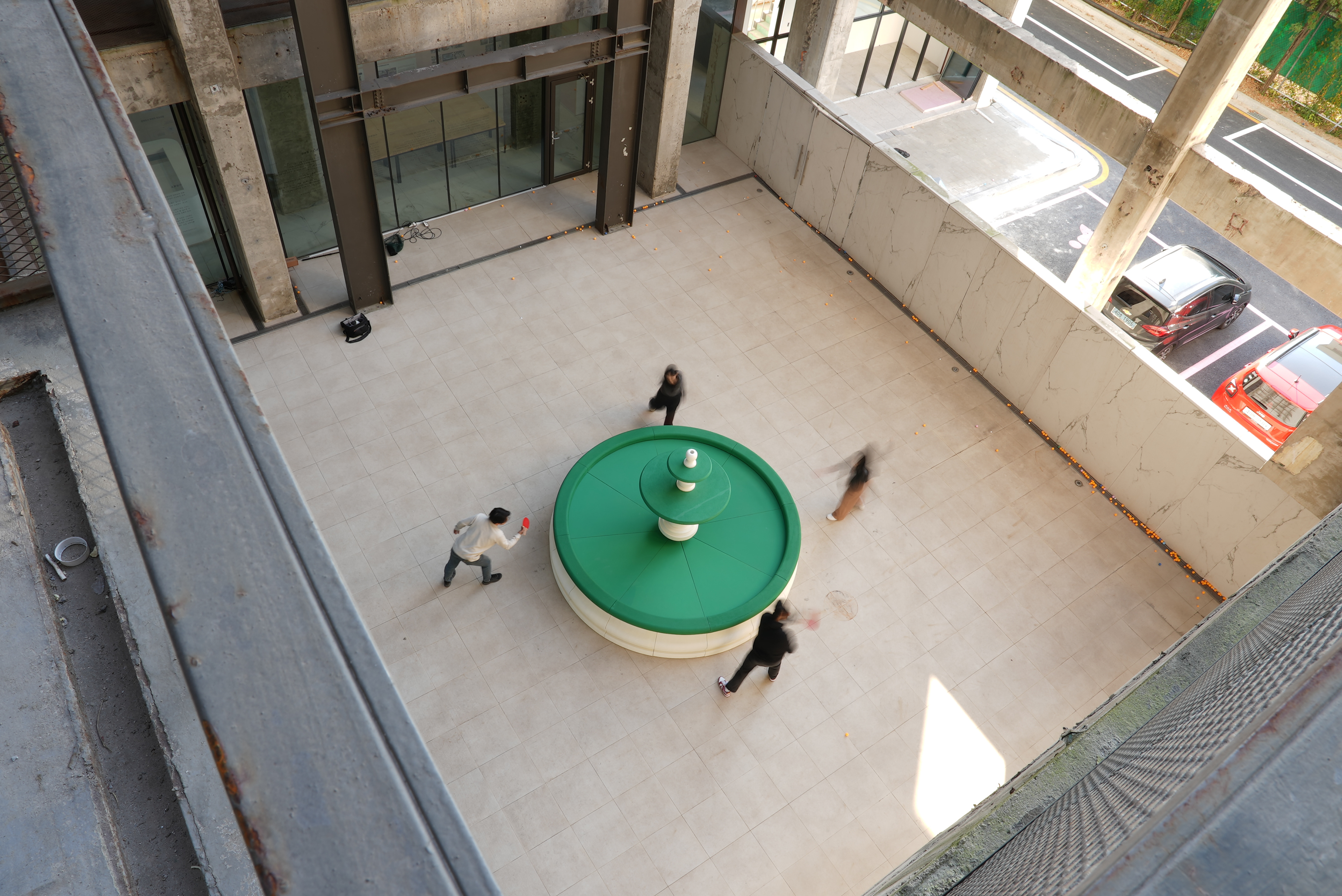
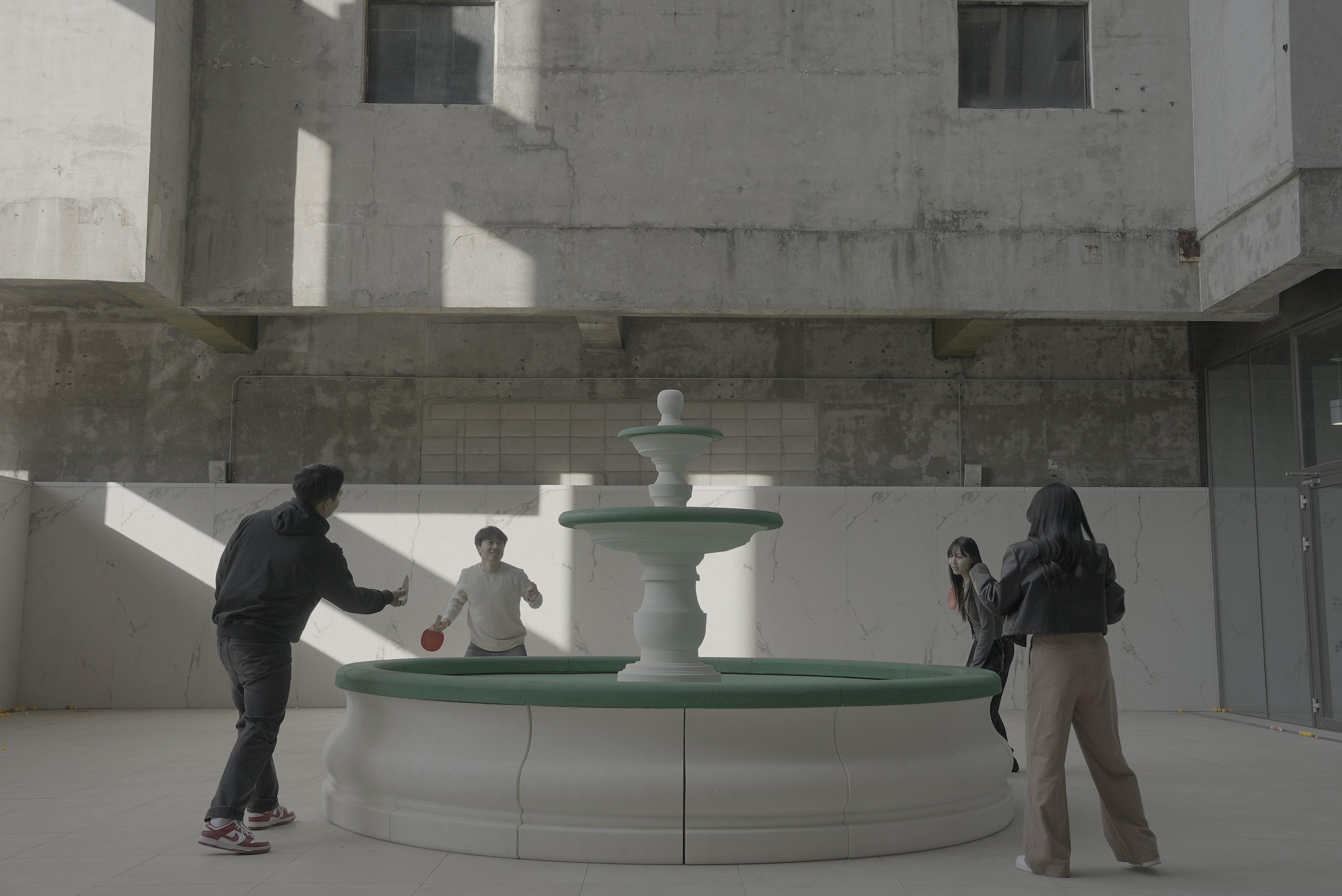
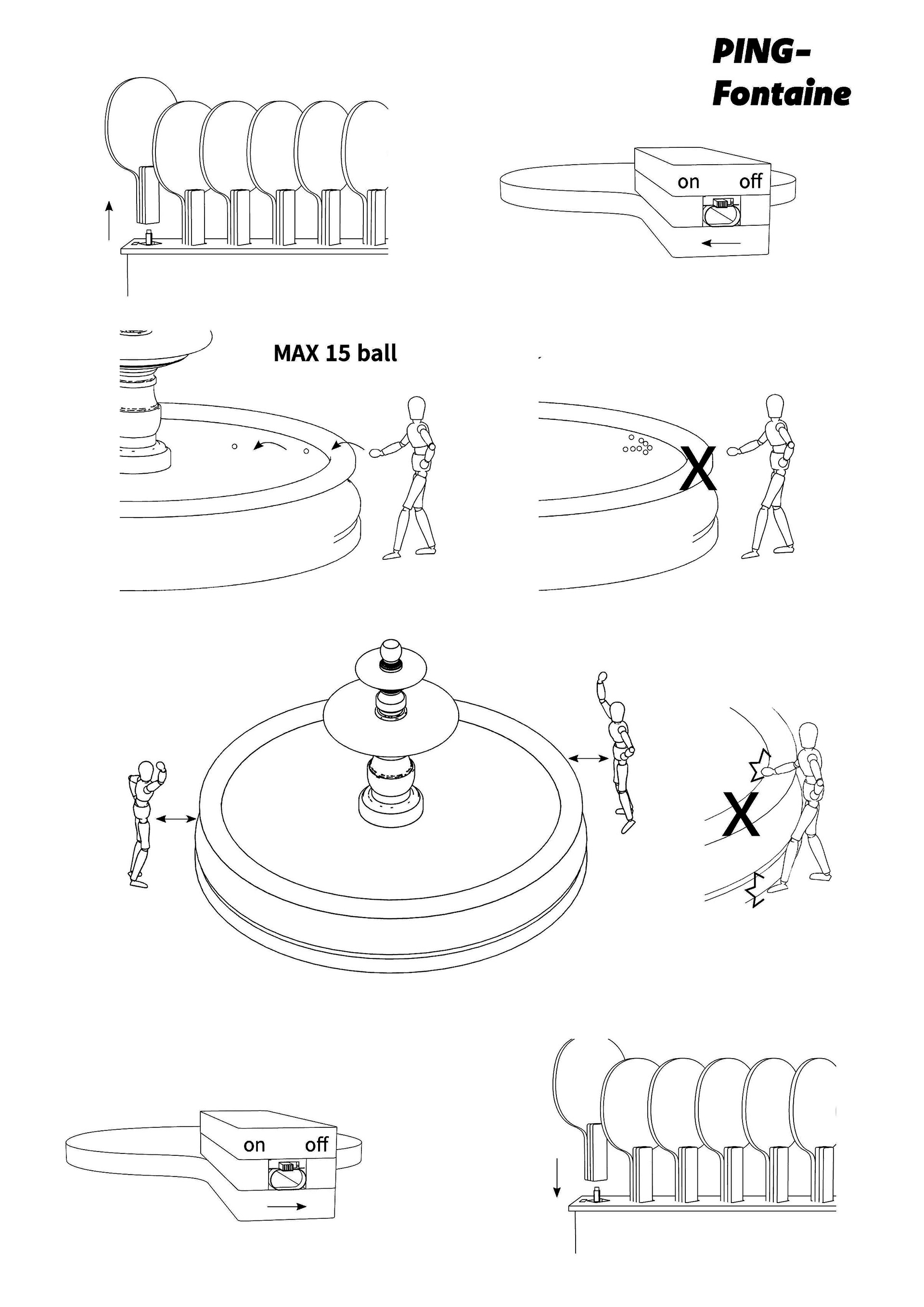
이 작업은 일종의 게임적 조건을 지닌다. 순환하는 탁구공이 궤도에서 이탈하면, 관객은 무의식적으로 탁구채를 휘둘러 공을 다시 시스템 내부로 종속시키려 한다. 질서를 유지하려는 관객의 이 참여 행위는 역설적으로 통제된 기계적 순환에 무작위의 변수를 주입한다. 시스템은 이 예측 불가능한 불확실성을 껴안은 채 탁구공의 부유와 낙하를 더욱 흩어진 풍경으로 증폭시킨다.
PINGFONTAINE is a cyclical structure in which the audience’s intervention functions as a variable that renews the system. The gyroscope sensor embedded in the paddle held by the viewer, as input, and the PWM-controlled fan, as output, continuously adjust to one another, generating pressure and rhythm in the air.
The work contains a game-like condition. When the circulating ping-pong balls drift out of their trajectory, the viewer instinctively swings the paddle in an attempt to bring them back into the system. This act of participation, driven by the desire to maintain order, paradoxically injects a random variable into the controlled mechanical circulation. Embracing this unpredictable uncertainty, the system amplifies the floating and falling motion of the ping-pong balls into a more dispersed landscape.