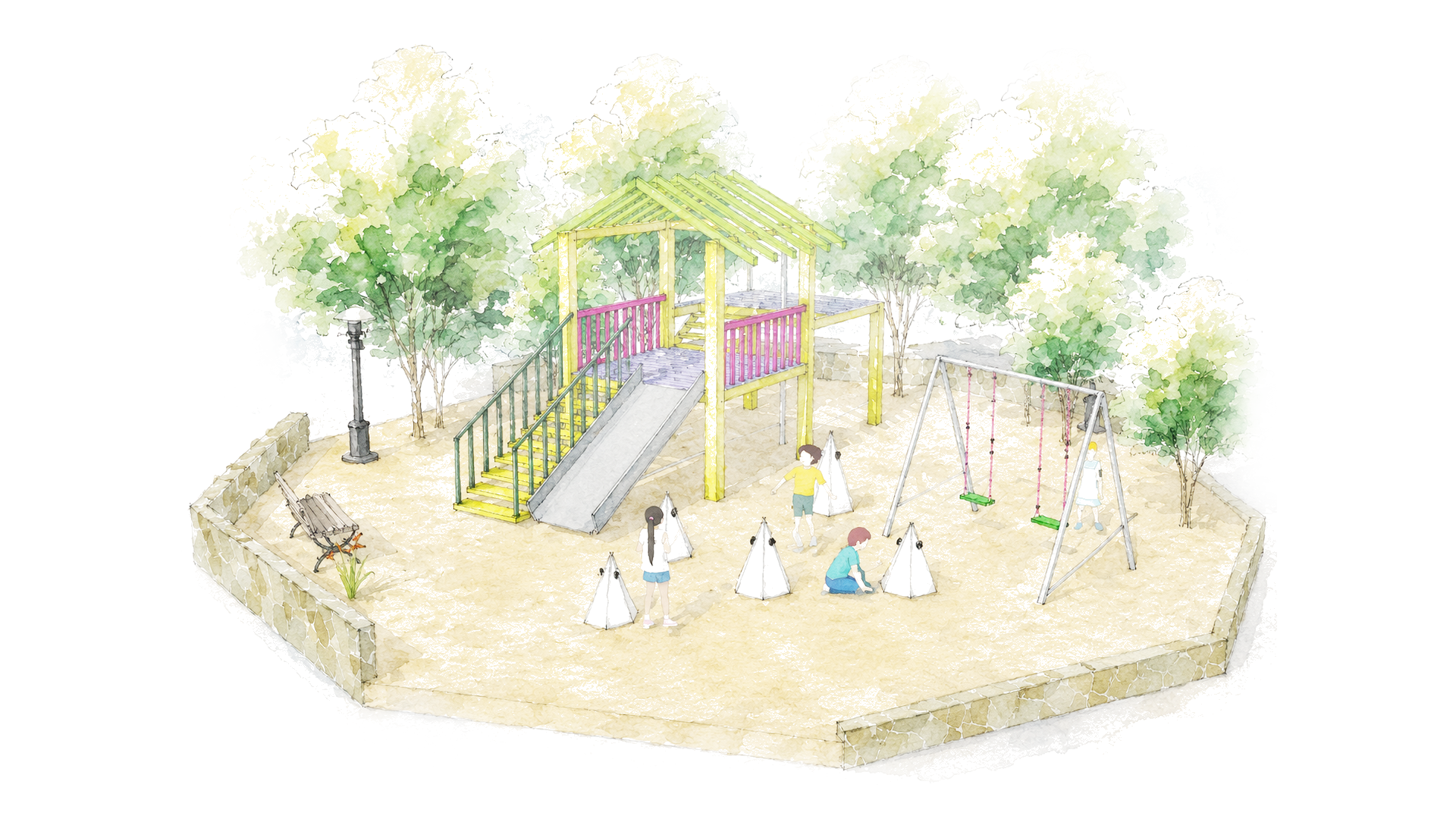
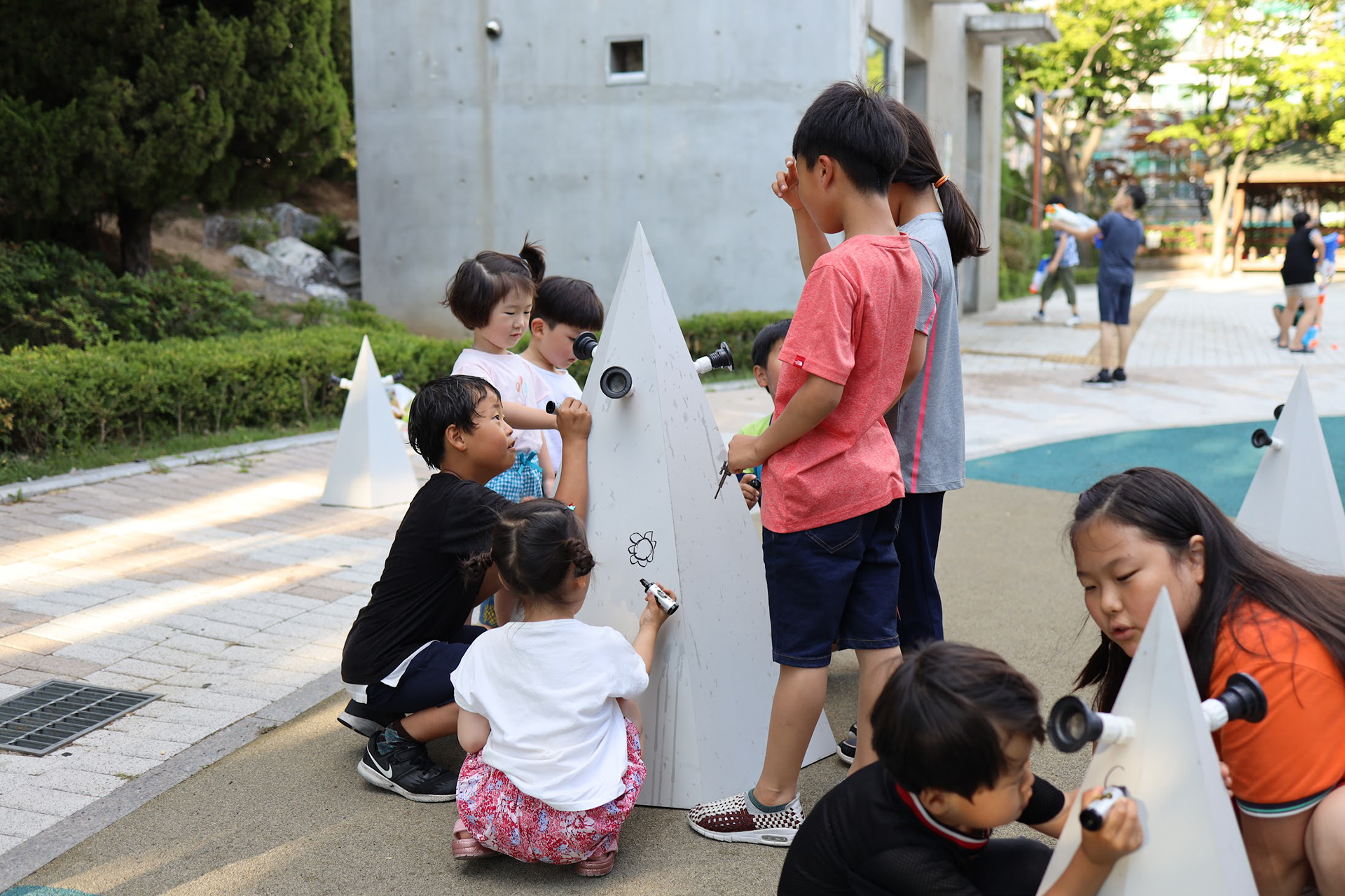
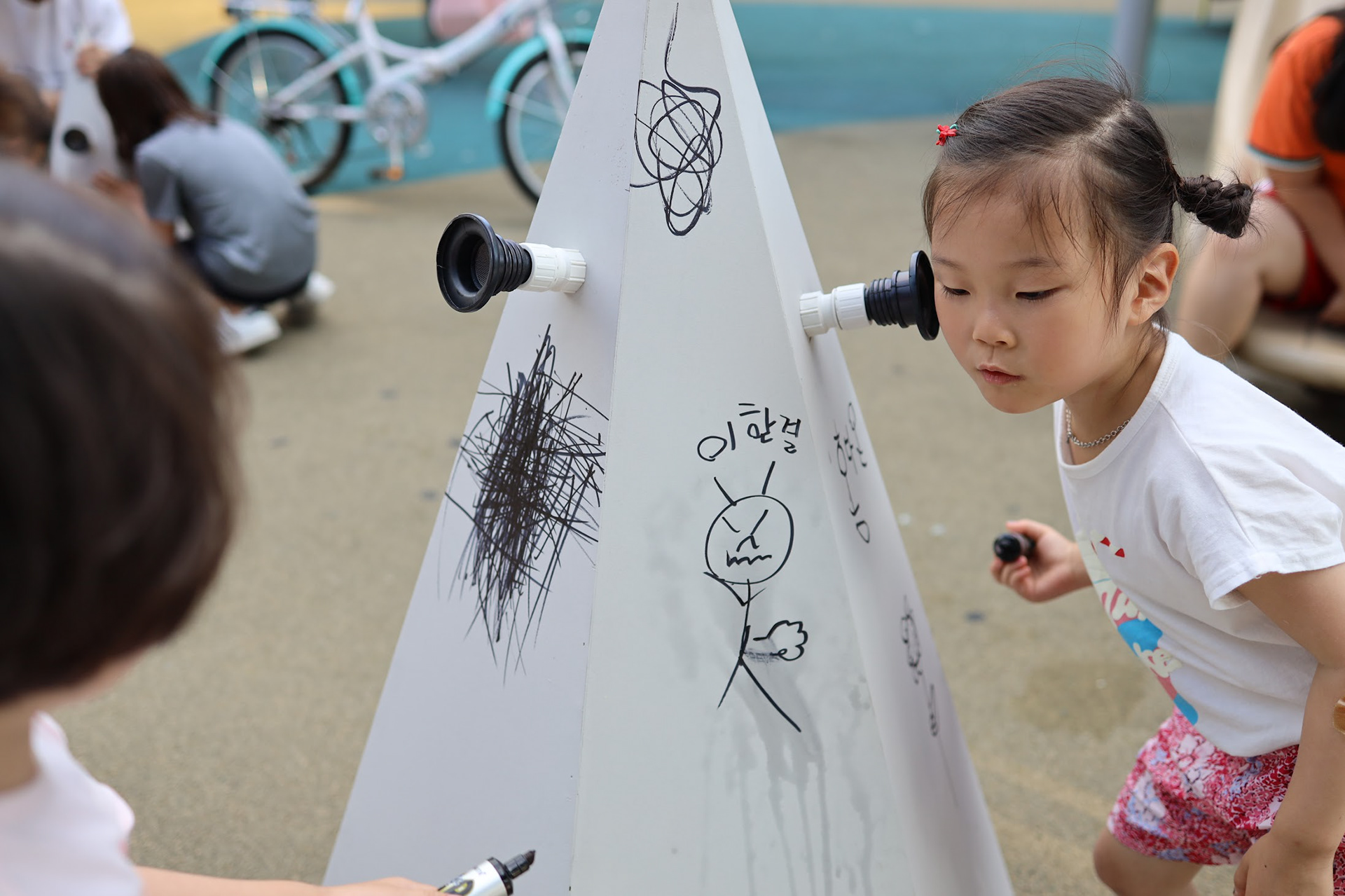
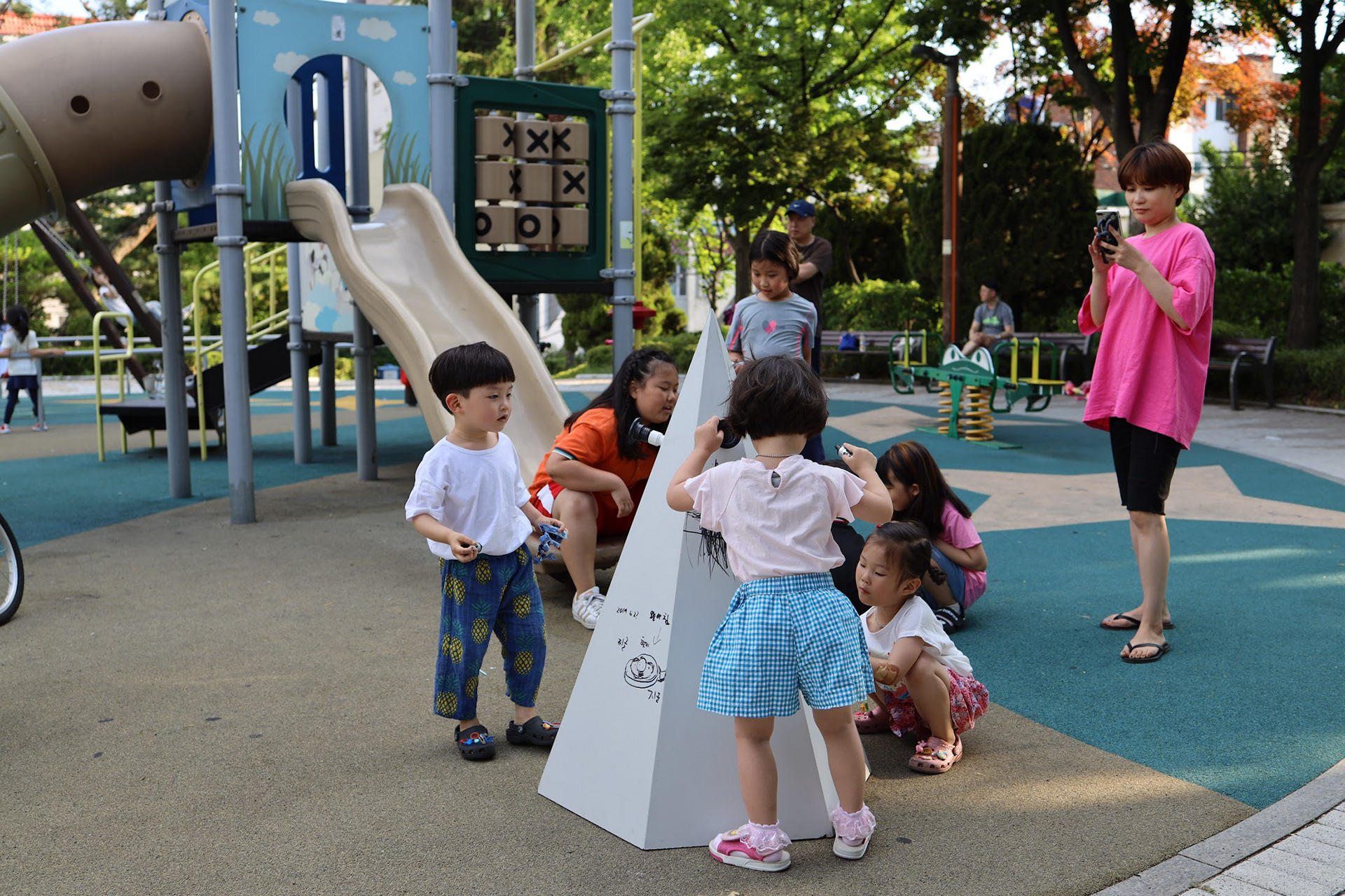
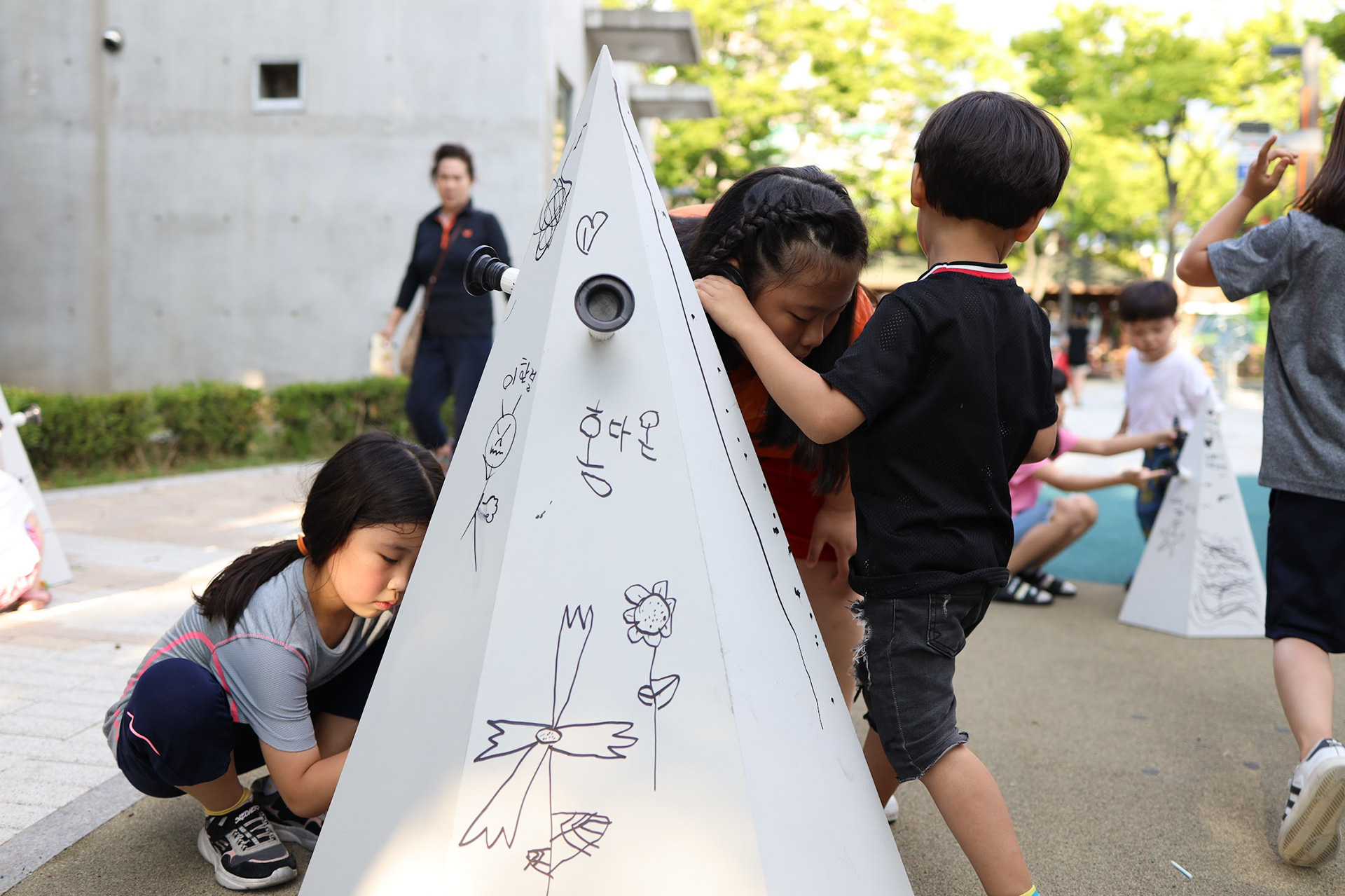
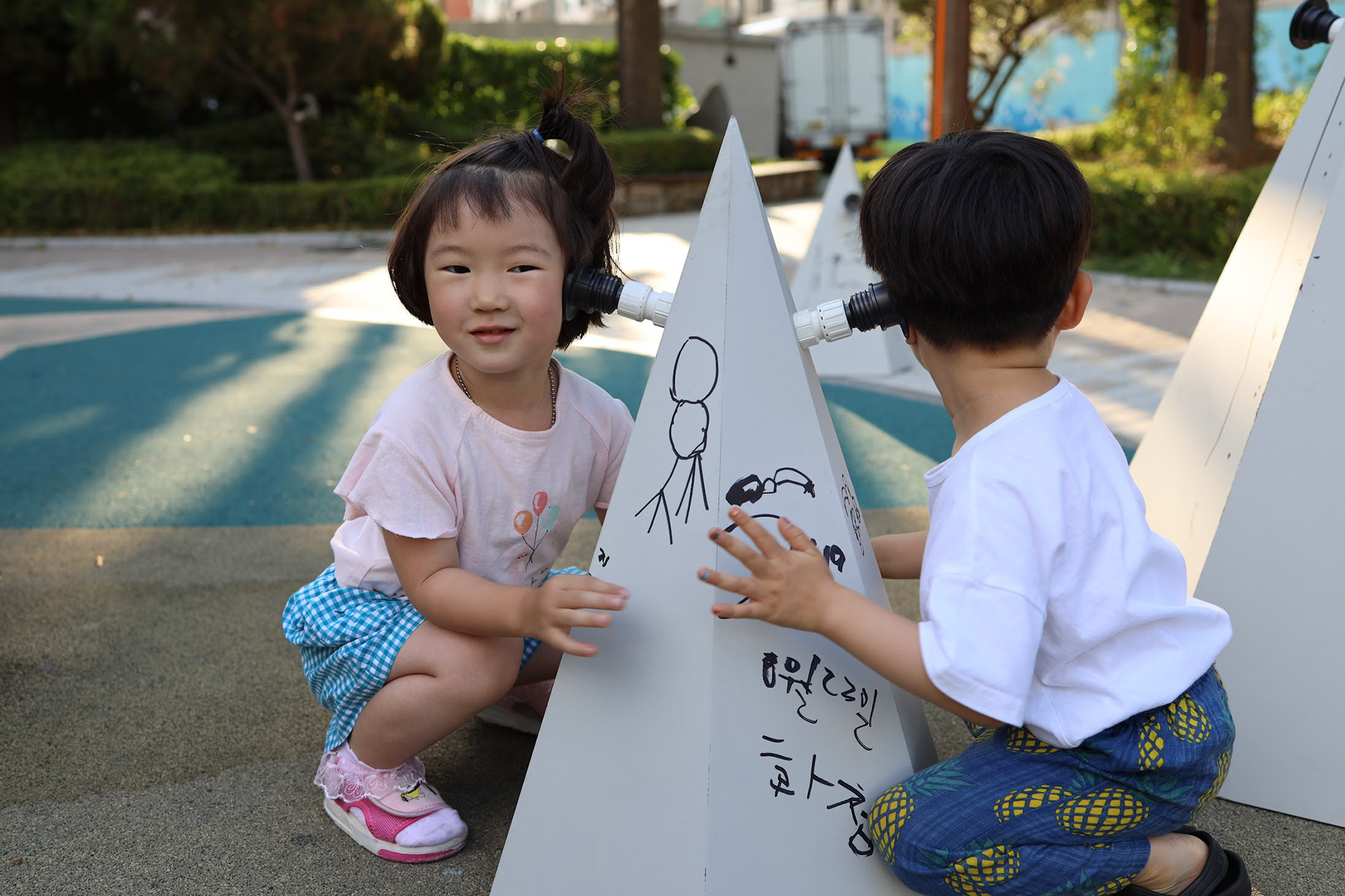
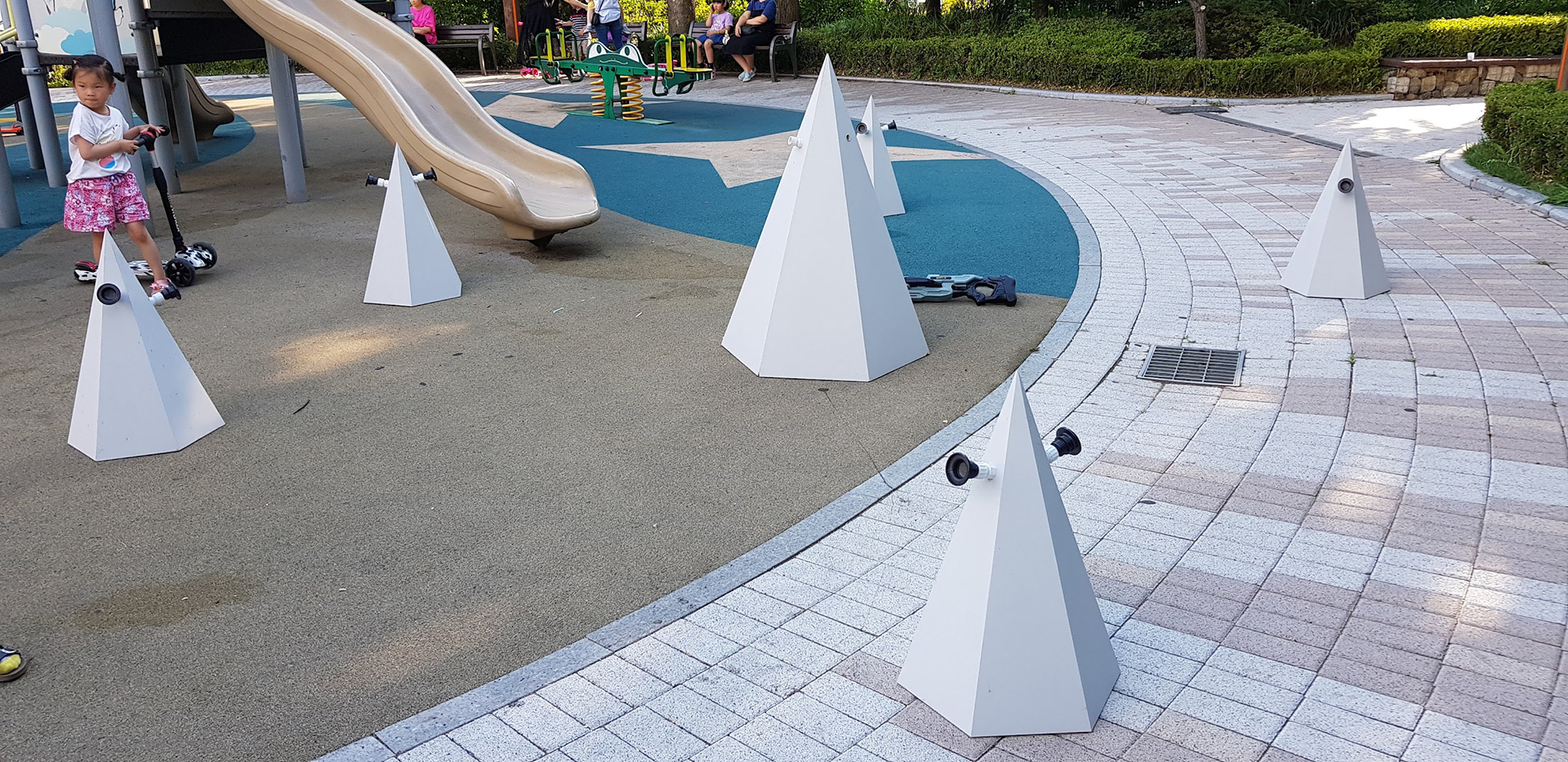
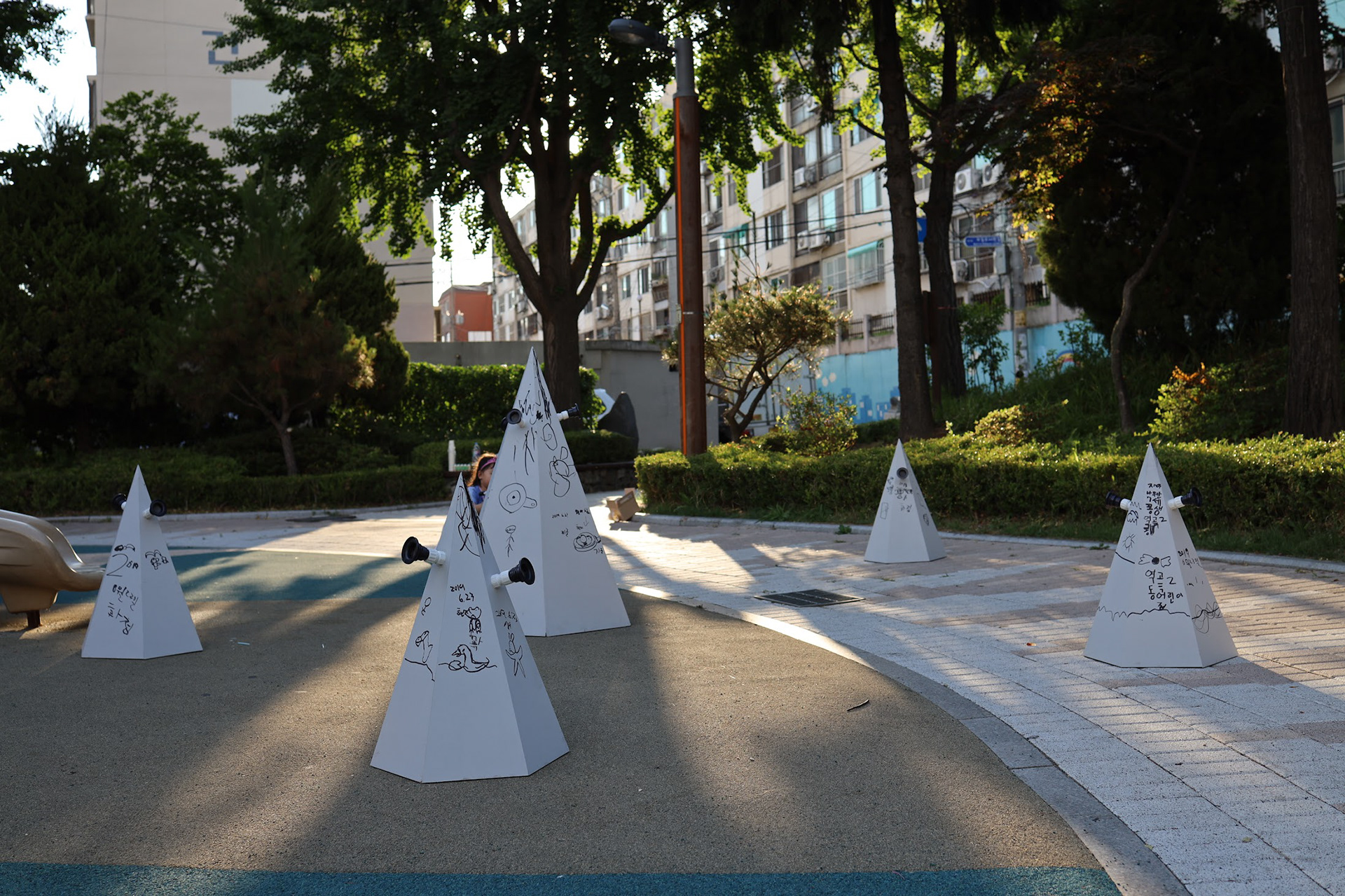
비 오는 날, 도로를 지나던 자동차의 소음이 문득 파도처럼 들린 적이 있다. 분명 익숙한 도시의 소리였지만, 눈앞의 장면과 잠시 분리되는 순간 그것은 전혀 다른 이미지로 바뀌었다. 이 경험은 소리가 언제나 고정된 의미를 지니는 것이 아니라, 어떤 맥락 속에서 듣느냐에 따라 다르게 인식될 수 있다는 생각으로 이어졌다. 아이들은 자라면서 오리 울음, 고양이 울음, 개 짖는 소리처럼 소리와 대상을 하나의 짝으로 학습한다. 그러나 그 연결이 잠시 느슨해질 때, 소리는 다시 자유롭게 상상할 수 있는 감각이 된다. 이 작업은 그런 상태를 만들어 보기 위해 시작되었다. 놀이터에 설치된 육각뿔 형태의 구조물 안에서는 출처를 알기 어려운 소리들이 불규칙하게 흘러나온다. 아이들은 그 소리를 듣고 무엇의 소리인지 맞히기보다, 각자 떠오르는 장면과 존재를 상상한다. 그리고 그 이미지를 육각뿔의 표면에 자유롭게 그려 넣는다. 작품은 이미 정해진 답을 알려주는 장치가 아니라, 소리를 다시 낯설게 듣고 자기만의 이미지로 번역해보는 작은 상상의 공간으로 작동한다.
On a rainy day, the noise of cars passing along the road suddenly sounded like waves. It was clearly a familiar urban sound, yet the moment it became briefly detached from the scene before me, it transformed into an entirely different image. This experience led me to think that sound does not always carry a fixed meaning, but can be perceived differently depending on the context in which it is heard. As children grow, they learn to connect sounds with specific objects, such as the quack of a duck, the meow of a cat, or the bark of a dog. However, when that connection loosens for a moment, sound can once again become something open to free imagination.
This work began with the desire to create such a state. Inside the hexagonal pyramid structures installed in the playground, unfamiliar sounds of uncertain origin emerge at irregular intervals. Rather than trying to identify exactly what each sound is, children are invited to imagine their own scenes, beings, and stories from what they hear. They then freely draw those images onto the surfaces of the pyramids. The work does not function as a device that delivers predetermined answers, but as a small imaginative space where sound can be heard anew and translated into personal images.